Showing posts with label Destination. Show all posts

Friday, May 11, 2007

Vythiri & Wayanad


Indulge in a romantic interlude in the treetops at an altitude between 3750 - 4500 feet. This Eco-lodge located in Wayanad, Kerala, offers you an opportunity to live in the wilderness overflowing with colours of nature that manifests itself in the wings of butterflies, birds and exotic vegetation. The shadows of this verdant forest amidst the fragrance of a thousand scents beckon you to a place where time moves according to ancient rhythms.

The forests of Wayanad - a feast for sore eyes, where nature has been blissfully preserved, spared of devastating urbanization. Its natural beauty has been kept intact; its natural springs unpolluted. Its emerald forests afire with scented blossoms with a hundred varieties of tree ferns, moss and flowering plants, flamboyant butterflies and birds. A place to listen to your heartbeat - misty mountains, gurgling streams, bright sunshine and cool shadows, thundering showers and a magical monsoon. Enjoy a honeymoon amidst Nature's bounty.

Tree House Accommodation

The tree houses have been completely constructed with environment-friendly materials. Local craftsmen and indigenous tribes were actively involved in the construction of these luxury tree houses. All rooms in the tree houses are equipped with room amenities such as an attached veranda with sit-out facilities, attached washrooms with toilettes and showers, a wash basin with a constant flow of water, floor coverings, excellent and discreet service, eco-friendly energy supply and more. These rooms are located on top of very old banyan trees, almost 80 feet above the ground level.
Cuisine


The culinary delights served here are specially cooked with vegetables and fruit grown at an organic farm within the resort grounds. These crops are grown without the application of fertilizers and chemicals. Traditional cuisine prepared with the choicest of spices in the typical Kerala style are served to the guests on banana leaves without spoons, forks and knives. You are supposed to eat with your fingers, as there is no other way to relish the mouth-watering delicacies prepared in the rural style. You can actually watch the food being cooked at this lovely forest hill resort.

Recreation

Enjoy the luxuriantly lush environs and explore the nature trails that lead you to nature spots and the spectacular panoramas that this heavenly hill station has to offer. Go on nature walks and course through nature trails, watch birds and listen to the myriad of jungle sounds that greet you. The tree houses are located at a distance of 2½ hours from Calicut airport and 6 hours from Cochin airport.

Darjeeling & Gangtok


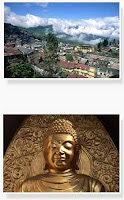
This picturesque 7,001-foot (3,134-meter) hill station - which served as a cool summer retreat for the English during the Raj - is especially well known for its production of tea. Flanked by towering mountains, including Kanchenjunga, elevation 28,208 feet (8,598m), Darjeeling has views that are truly dramatic - a great way to fully savour them is by taking a trek in the surrounding countryside. Nestled in the grandeur and beauty of towering snow-capped mountains, with the mighty Kanchenjunga (King of the Mountains) dominating the somber, snowy sentinels, is a jewel of a town - elegant, sophisticated and incredibly beautiful.

Known as the Queen of the Hills, Darjeeling’s wonderfully cool climate, clear brisk air and the breathtaking views of the Himalayas once drew the British here to escape the stifling heat of Kolkata. Mark Twain seems to have visited this Himalayan city and penned down his impression about Darjeeling as the "land that all men desire to see, and having seen once, by even a glimpse, would not give that away for the shows of the rest of the world combined." Such is the beautiful land of Darjeeling.

These spectacular views and the climate have stayed the same, which is why at any given point you will find honeymooners there. But beware, the mighty Kanchenjunga stands sentinel to your romance. Stick your head out the window of the train as it turns the loop at Batasia, wrap your cold hands around a cup of hot, fragrant chai as you watch the sun rise over Kanchenjunga – golden, glorious, and humbling.

Getting to Darjeeling

The most romantic way to access Darjeeling is by hopping the Darjeeling Himalayan Railway, also known as the "Toy Train", a narrow-gauge train that has been chugging up and down the hill since 1881. The train departs from the New Jalpaiguri station (near Siliguri) and takes around 6.5 hours (picking up passengers at Kurseong) to reach Darjeeling; advance bookings are recommended. Two-hour "joy rides" on this train are also possible for those who don't have time to take the full journey. Apart from the Toy Train, you can get to Darjeeling by bus as well as by share-jeeps and taxis, which all make frequent trips between Darjeeling and surrounding towns, including Siliguri. You can easily get around "downtown" Darjeeling by foot. For longer trips, catch one of the numerous share-jeeps that cost just a fraction of what you'd pay for a private taxi.
Darjeeling's Attractions

Riding on the "Toy Train" is one of the town's glowing attractions, giving passengers the chance to see the breathtakingly beautiful scenery en route to Darjeeling. You can get an insight into the tea-making process at the Makaibari Tea Estates, which offers not only tours but also lodging, and mountain and jungle treks.

Located around eight miles (12.8 km) south of Darjeeling is Tiger Hill, which has stunning views of the surrounding mountains, including Kanchenjunga. You can even catch a distant glimpse of Mount Everest. The best time to visit is at the crack of dawn, when the sight of the rising sun is positively magical. In the Darjeeling vicinity you'll find some notable Buddhist monasteries, including the Bhutia Busty Gompa and the Yiga Choeling Gompa, each built in the 19th century and containing fine murals.

The top spot to book white-water rafting expeditions (these range from a couple of hours to a couple of days) is from Darjeeling, even though the trips themselves often depart from the Teesta Bazaar. Boating is along the rapids of the Rangeet and Teesta Rivers, with prime rafting seasons September to November and March to June.

You'll find some terrific places to eat in Darjeeling, including restaurants that dish out global fare, from Mexican-style enchiladas to Italian pasta and Tibetan momos (fried or steamed stuffed dumplings). Many restaurants in Darjeeling close as early as 8pm. Room rates skyrocket April to June and October to December, so come at other times to save money.

Gangtok

Capital of the remote north-eastern Indian state of Sikkim, Gangtok stretches along an undulating ridge and enjoys glorious views of the mighty Kanchenjunga, India's highest mountain. Although it has seen escalating modernization in recent times, this city still has a more relaxed demeanour than most Indian towns its size. Gangtok is a good base from which to explore the state's surrounding attractions. Gangtok means, aptly enough, "hill top" and is perched at 5500 feet high on the ridges of a valley. From Gangtok, you look over the hillside, down and across to terraced fields, with tall, white Buddhist prayer flags fluttering in the wind and endless stunning backdrop of towering snow-capped peaks.

Getting To Gangtok

The most common way to reach Gangtok is by bus, with state-run buses arriving and departing from the SNT (Sikkim Nationalized Transport) station on Palzor Stadium Road. In addition, privately operated mini-buses travel here from a selection of towns including Kalimpong, Siliguri and Darjeeling; the private bus depot is on National Highway 31A. You can also catch one of the many share-jeeps and taxis that shuttle between Gangtok and various towns, including Kalimpong, Siliguri and Darjeeling. There are plenty of share-jeeps in Gangtok, which are a cheap and quick way to get around town. Private taxis are also available. Gangtok's restaurants offer a jumble of Indian, Tibetan, Chinese, continental and Sikkimese cuisine at reasonable prices. Hotel tariffs decrease by as much as 30 percent during Sikkim's off-peak seasons, January to March and July to August.

Gangtok's Attractions

The Namgyal Institute of Tibetology was established in 1959 to carry out research into Tibetan and Mahayana Buddhist culture. The institute houses a massive collection of Buddhist literature and manuscripts as well as an array of sublime tankas (Tibetan paintings) and a variety of sacred relics, including a human skull that once served as a holy bowl. Close to the institute is the tranquil and colourful orchid sanctuary and memorial garden. Sporting stunning town and mountain views is the Enchey Gompa. This Buddhist monastery, built in the early 20th century, houses murals and statues.

Kodai Canal


Kodaikanal is one of the most popular hill resorts in India. It literally means 'gift of the forest' in Tamil and is zealously guarded by the sylvan beauty of dense forests on the upper Palani Hills near Madurai, at an altitude of about 2133 metres. Pear orchards and buildings with gabled roofs add a fruity and romantic touch to Kodaikanal.

The pride of Kodaikanal is the 'Kurinji-flower', which blossoms once in 12 years. With its mountains, unique rows of silky pine trees sloping down to clear, cold streams, spectacular views that suddenly disappear in foamy mist, serene lakes and fresh air, Kodaikanal is an ideal hill resort for honeymooners.

Prime Attractions

Berijam Lake located at a distance of 21km from Kodaikanal and is one among the beautiful lakes of South India. Spread over an area of 24 hectares, the lake is star shaped and is known for its pure water.

You can take short treks and hikes to tourist spots close by as well to local viewpoints. Overnight treks are also possible here where one can spend a night at a local village.

Getting to Kodai

Kodaikanal is connected by road with Chennai (520km), Ooty (264km), Trichy (197km), Coimbatore (175km), Kumili (160km) and Madurai(120km). Regular bus services are available from Madurai, Palani, Kodaikanal Road, Theni, Dindigul, Tiruchirapalli, Kumuli (Thekkady) and Coimbatore. Additional buses ply during the season. Taxis and vans are available for local transportation.

The nearest airport is at Madurai (120km from Kodaikanal).

The nearest railway stations are the Kodai Road Railway Station (80km) and the Palani Railway Station (64km).

Jaipur


Popularly known as "The Pink City", Jaipur is the most romantic and chosen tourist destination amongst honeymooners. It is a bustling capital city and business centre with all the trappings of a modern metropolis yet flavoured with an age-old charm that never fails to surprise a traveller. The old Jaipur painted in Pink can grip any visitor with admiration. The Stunning backdrop of ancient forts Nahargarh, Amer, Jagarh and Moti Dungri are dramatic testimonials of the bygone era and a reminder of their lingering romance.

Places to See:

Amber Palace - overlooking the artificial lake south of the town of Amber is one of the most popular tourist sites in the city, famous for its mixture of Hindu and Muslim architecture and offering elephant rides from the town up to the palace courtyard. Although the structure is today known as Amber Fort, the complex was initially a Palace Complex within the Fort of Amber.
Jaigarh Fort - on the hills above the Amber Palace complex offers stunning views of the foothills of the Aravalli range, as well as immense underground water-storage tanks, a medieval canon foundry and an impressive collection of medieval cannons including the Jaivana, reputed to be the world's largest cannon on wheels.
Jal Mahal is on the way to Sisodia garden. The Rajput style "Water Palace" sits in the centre of the Man Sarobar Lake. It is often dry in the summer but winter monsoons frequently turn it into a beautiful lake filled with water hyacinths.

Distance from major cities

Delhi - 265km

Ahmedabad - 625 km

Chandigarh - 510 km

Mumbai - 1176 km

Calcutta - 1472 km

Agra - 246 km
Getting to Jaipur

By Air: The airport nearest to Jaipur is Sanganer Airport, hardly 10 km from the city. Domestic flights connect Delhi, Kolkata, Mumbai, Ahmedabad, Jodhpur and Udaipur to Jaipur. However, there is only one international flight to Dubai.

By Train: Jaipur is well connected by trains to all the nearby major cities such as Delhi, Agra, Mumbai, Chennai, Bikaner, Jodhpur, Udaipur, and Ahmedabad.

By Road: A network of good motor able roads and private and government buses connect Jaipur to all the nearby major cities such as Delhi and Agra.

Goa


Sun-kissed beaches and the celebration of life would ideally define this place. The magnificent scenic beauty and architectural splendour of its temples, churches and old colonial houses - European style central squares and Indian bazaars, Portuguese churches sharing their walls with Hindu temples, have made Goa a favourite with travellers around the world. The vast green expanse of the Sahyadri mountain range ensures that Goa has an abundance of water.

Goa is a paradise for water-sports lovers. Indulge in white water rafting, para sailing and other activities. Casinos, a major tourist attraction here, are located in most of the five star hotels and luxury cruises operating in Goa. Just around Christmas until the dawn of the New Year, Goa is in a festive mood and plays host to thousands of visitors from all over India and around the world - siestas and fiestas coupled with fun and 'feni', the local alcoholic beverage made from cashew nuts.

The cuisine is a unique blend of Konkani and Portuguese styles, with coconut-based curries being a local favourite. Pork and beef are part of any regular feast. The sea and rivers abound in seafood - prawns, mackerels, sardines, crabs and lobsters are the most popular with the locals and the visitors.

Tour operators often tend to ignore the fact that this former Portuguese colony on the Arabian Sea boasts of lush hills, cool blue waters, coconut groves, spice plantations, paddy fields and a host of heritage buildings from the bygone era. They're all perfect for exploring as long as it's not raining. If you have the time, there is nothing like renting a car and travelling through unexplored Goa.

Getting to Goa

All flights - national and international, to and from Goa - operate from the Goa Airport at Dabolim near the port town of Vasco-da-Gama. The airport is about 30 km away from the capital of the city, Panaji and is owned by the Indian Navy.
Goa is easily accessible by road as it is connected to all major towns in India by the National Highways - NH4A, NH17 and NH17A. There are bus services operating between Goa and most towns and cities in the neighbouring areas such as Mumbai, Pune, Belgaum, Hubli, Bangalore, Mangalore, etc. These modes of conveyance can be availed at fairly regular intervals throughout the day. The charges, however, are subject to distance and season.

The high-speed Konkan Railway is your answer, if you want to know how to go to Goa by train. It starts from Mumbai, via Miraj and Pune, has a daily train and takes around 8-9 hours to reach. The rail route also has trains that travel past Mumbai in the north right up to Delhi, and in the south up to Thiruvananthapuram in Kerala. Goa has two major railway stations. The South Central Railway terminus is at Vasco-da-Gama and the Konkan Railway terminus is at Margao. A word of caution; this train is in great demand; if you intend to use it, make your reservations well in advance.

Hyderabad


Once upon a time pearl traders used to spread their wares by the roadside and hawk them the way you'd find green vegetables peddled today. The city has gotten a lot more tech-savvy since then, but it still retains quite a bit of the charm of the Shahi and the Nawabi days.

While you find a younger crowd that is at once cosmo and geeky, you also find a lot of the old world aura about it. Fondly called the 'city of Nawabs' Hyderabad offers a captivating combination of tradition and trend to tourists and travellers.

The fifth largest metropolis of India, state capital of Andhra Pradesh, known for its rich history and culture with monuments, mosques, temples, a rich and varied heritage in arts, crafts and dance. With a 400-year history, Hyderabad and its twin city Secunderabad are a heady mixture of heritage, traditional hospitality and a thriving software revolution - revolution that has already attracted Microsoft to set its only overseas base here.

Hyderabad is famous world over for its fabulous diamond and pearl markets, glass embedded bangles and the delectable cuisine such as their Hyderbadi biriyani.

Some must-see tourist visits include Lad Bazar, Charminar, Golconda Fort, Hussain Sagar Lake, Salar Jung Museum, Ramoji Film City, Mecca Masjid, Birla Mandir, Nehru Zoological Park, Qutb Shahi Tombs, Church of Our Lady of Health, Holy Trinity Church and the Spanish Mosque.
Getting to Hyderabad


If you are travelling by air, you will arrive at the Rajiv Gandhi airport, Begumpet. The airport is centrally located, being within easy reach of both Hyderabad and Secunderabad.

If you are travelling by train, you will alight at one of the following railway stations: Secunderabad, Hyderabad (at Nampally), Begumpet or Kachiguda. If you arrive by long distance bus, you will alight at the Jubilee Bus Station, Secunderabad, or at the Hyderabad Bus Terminal at Gowliguda. Buses are actually pretty flexible and stop at quite a few places along the way.

If you are travelling by local transport: At the airport, you can hire prepaid taxis, private cars or auto-rickshaws. If you have room reservations at one of the bigger hotels, they will send transport to collect you. But if nobody is coming to receive you, and if you look new to town, there are a whole lot of chaps out there who would try to rip you off. And if you are a foreigner (or basically look like one), they'll just pounce on you! The general impression is that you are pretty gullible and loaded and can pay 10 times the actual fare, if not more.

Khajuraho


Khajuraho is a place well known for the sculptures in erotic poses in its temples, some hewn entirely out of a single block. It is not about religion and worshipping and deities. An amalgamation of science and art of architecture, these 10th-11th century temples have a very interesting legend behind them that connects them to the origin of the Chandela dynasty. It is said that in a fit of passion and lust, the Moon God seduced and ravaged a beautiful Brahmin girl known as Hemvati, resulting in the birth of Chandravarman (the founder of the Chandela dynasty). Later, Chandravarman had a dream where his mother requested him to make a temple, which would reveal all aspects of the treasure of passion and erotic fantasy to the world.Thus he brought an artistic revolution by building the famous Khajuraho temples, in the town, which was his capital.

Some people also believe these erotic art forms to be the visual depiction of Kamasutra, art of sex or the relations between Shiva and Parvati, the divine couple. Khajuraho temples got lost into obscurity and were only discovered by chance but they quickly became India's second most favoured tourist destination after the Taj Mahal. This temple complex is perhaps the largest group of medieval temples. Other than eroticism, these sculptures also depict other refined courtly accomplishments such as music and dance. Only 22 temples have survived out of the original 85 temples. It displays one of the most unique stone-carving works and was declared a World Heritage Site in 1986.

As far as honeymoon destinations go, Khajuraho was probably created with newly-weds in mind - lost in a time warp from ages past. There is little else to intrigue you except each other and the temples. They are very familiar to the eye, with countless photographic reproductions and even Bollywood using them as a backdrop for films. You wonder at the imagination and openness of the citizens who, as early as 950, took a hundred years to complete this celebration of humanity. One of the most famous ones is that of a woman holding a mirror. A winking elephant is also strategically placed when you notice his gaze at a kissing couple. They say the Taj Mahal is best viewed in moonlight on a full moon night. At Khajuraho, dawn is the time to glorify these temples. The rising sun really brings the statues to life.
Getting to Khajuraho

By Air: Khajuraho has daily domestic flights to and from Agra, Varanasi and Kathmandu.

By Train: The nearest railway stations to Khajuraho are Mahoba, Satna and Jhansi. All of these are well connected to most of the major cities of India.

By Road: Khajuraho has frequent bus services and good roads to and from the major cities of India including Panna, Mahoba, Satna, Jabalpur, Bhopal, Gwalior, Indore, Agra and Jhansi.

Munnar


Munnar is located in the Idukki district of Kerala. Munnar's mesmerising greenery, mountain scenery, calmness and cool refreshing air attract honeymooners and tourists throughout the year. It is a weekend hideout location for domestic tourists during the summer season, while foreign travellers come to enjoy the natural beauty of Kerala.

With glistening brooks and cascades, paddy fields, coconut trees, Munnar is one of the most popular hill stations in India; situated at the confluence of three mountain streams - Mudrapuzha, Nallathanni and Kundala, sprawling tea plantations, serene vastness of backwaters and lakes.

Among the exotic flora found in the forests and grasslands here is the Neelakurinji, a flower that bathes the hills in blue colour once every twelve years. Munnar also has the highest peak in South India - Anamudi, which towers over 2695m and is an ideal spot for campers who like to do some trekking. Munnar is a commercial centre with one of the world's best tea estates. There are about 30 tea plantations in and around Munnar. With a visit to Munnar, one can witness the nurturing of growing tea to the process of manufacturing and packing. The Duke of Wellington is reputed to have been the first European visitor to Munnar, in 1790.

Treat your body and soul to 'Ayurveda', the sacred knowledge of Life, which will rejuvenate and strengthen you so as to achieve ideal health and longevity. Indulge in an Exotic Blue Water Cruise in Ashtamudi or a Houseboat Cruise & Resort Stay starting from Kollam.
Getting to Munnar

Altitude: 1600 to 1800 m above sea level

Clothing: Warm Clothes and Rain Gear

Nearest Airport: Cochin

Nearest Railway Station: Aluva

By Road: The best way to get to Munnar's fabulous tea bushes is by road from Kochi. However, the monsoons that do great things for the tea are not half as kind to the roads and the 4 hour journey up by bus may become a prolonged pain in the...back! Take a cab from Cochin, Kottayam (5 hours), Madurai (6 hours), Coimbatore (6 hours too), or Thiruvananthapuram (9 hours). Both rattling state transport and sleeker privately run buses also service these routes.

Latest: A 3500 ft high altitude Sports Training Complex on the lines of hose found in Europe and elsewhere is to come up at Munnar soon. High altitude training is found to enhance the performance of athletes the world over

Coorg


A friendly warning to all concerned: One trip to Coorg (Kodagu) and it'll haunt you for the rest of your life. You might leave Coorg, but Coorg will never leave you. Incomparable scenic beauty, lush green valleys, coffee plantations, teak wood forests and majestic mountain ranges are just some of Coorg's virtues. Add to that a strong, brave martial race of Coorgs (Kodavas) that reveres tradition, has a distinct culture and lives life to its fullest.

Coorg is situated on the Western Ghats of Karnataka. For the adventurous at heart, it is an absolute treat. Trekking, golfing and angling are some popular options. Religious trips abound on Hindu and Buddhist circuits. Visitors can trek to the top of Tadeyendamol, the highest peak in the region, and view the Arabian Sea in the distance. Alternatively, one may simply follow the mountain trails dotted with little shrines - some beside waterfalls and others on the banks of rivers. You can also relax your body and mind with special Ayurvedic massages. But the predominant entity here is nature at its best. Coorg is the dreamland of a philosopher. If you're the type who likes to mingle with nature, romance in the mountains, feel the tingle of a cool and gentle breeze, watch leaves flutter and dance, and hear bird-song fill the air, then Coorg is just the place for you!

In March and April it is coffee-blossom time in Coorg. Stretches of these snow-white flowers waft a heady fragrance and their magnificence is an unforgettable sight. When the blossoms turn into berries, the bushes are cropped. The cherry-red fruit is then pulped, the separate coffee seeds dried and sent to the curing works. Stay on a coffee plantation can provide for a heady first-hand experience. Besides coffee, cardamom, pepper, paddy, orange, timber and honey form the major products of this district.

Coorg is a very eco-conscious place. Coorgs are environmentally aware of their responsibilities towards nature and take great care to preserve it. They are highly appreciative of efforts made by anyone to conserve nature.
Getting to Coorg


Air: The nearest airports are at Mangalore (135 kms) and Bangalore (260 kms).

Train: The nearest railheads are at Mysore, Mangalore and Hassan (146 kilometers).

Road: From Bangalore, there are two routes to Coorg. Both routes are almost the same distance (around 250-260 kilometers). The route via Mysore, is the oft-frequented route. The stretch after Hunsur is scenic and the drive through the coffee plantations is absorbing. The other route is via Neelamangal, Kunigal, Chanrayapatna, all of which are located on the National Highway. After Chanrayanapatna, the state highway route takes you to your destination

Bus: The bus service in Madikeri has connections to almost every place in Coorg, except Kushalnagar, for which you have to hop onto a bus to Bangalore. Alternatively, there are regular buses to Mysore, Mangalore, Hassan, Chikmagalur, Shimoga.